An Overview of Taiwan's Status and the Functioning of the Universe
744 sec.
Views: 304
An Overview of Taiwan's Status and the Functioning of the Universe
Issac Newton cast aside the premise that "The Earth is at the center of the universe," and was then able to make much progress in his astronomical studies. In a similar fashion, we should cast aside the premise that "Taiwan is an independent sovereign nation, and its name is the Republic of China." Only then will we be able to find the proper direction for Taiwan's future development.
Issac Newton cast aside the premise that "The Earth is at the center of the universe," and was then able to make much progress in his astronomical stu
https://www.youtube.com/watch?v=68YrF4IUeH0
0
0
Taiwan Perspectives (4)-v2: Lessons from the Mexican American War
719 sec.
Views: 154
Taiwan Perspectives (4)-v2: Lessons from the Mexican American War
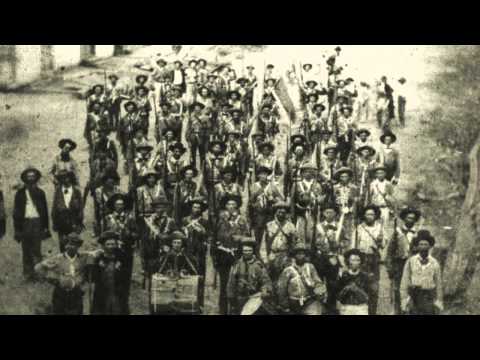
The notion that we can learn many valuable lessons from the study of the conduct of war, and the new dispositions of territory which have resulted from war, is not popular among most Taiwan and China scholars. They much prefer to advance their theories regarding a correct statement of "Taiwan's legal status" in a vacuum, without reference to other international precedent.
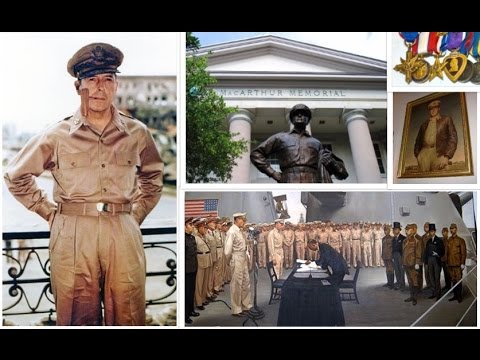
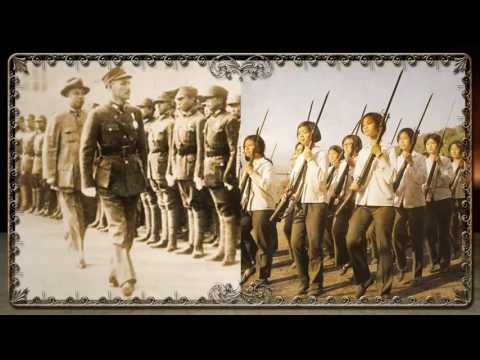
Of particular note is that many civilian scholars seem to agree with the proposition that Chiang Kai-shek (CKS), and his followers, can "define" the legal significance of the Oct. 25, 1945, surrender ceremonies in Taiwan any way they want. Based on that, in their view, all future legal relationships for (and between) Taiwan territory, the Taiwanese people, and the world community will then flow from the premises which CKS has established.
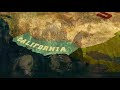
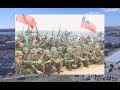
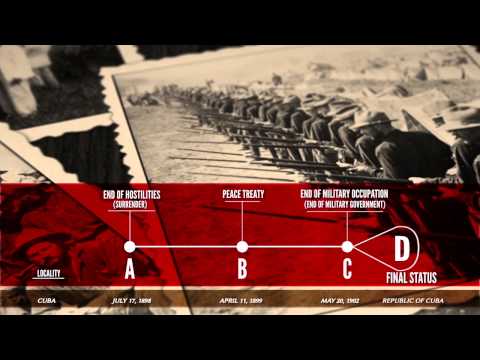
In fact, nothing could be further from the truth. The post-Napoleonic world has seen many instances of surrender ceremonies after war, and customary precedent has already firmly defined all related legal parameters. Hence, in Part IV of our series of TAIWAN PERSPECTIVES, we do a thorough overview of the Mexican American War, the causes of the war, and two particularly notable legal developments. These were the U.S. Supreme Court cases which clarified important points of legal confusion and debate which occurred in that era.
The conclusions reached by the U.S. Supreme Court in these cases are also very applicable to a discussion of Taiwan history beginning in 1945. Moreover, the role of the USA in Taiwan affairs can be better understood by referring to these decisions and their ramifications.
Unfortunately, even today, the majority of government officials, university academics, and UN staff members still completely overlook the similarities between the situations of the Mexican American War occupations, and the situation of Taiwan after the close of hostilities in WWII. This video is a long needed introduction to this important area of legal studies.
In summary, this 4-part series of TAIWAN PERSPECTIVES videos is one which every person interested in the USA - PRC - Taiwan triangular relationship should watch (and re-watch), as well as recommend to their friends, associates, teachers, professors, debating club members, and representatives in Congress.
= = = = = = = = = = = = = = = = = = = = = = =
Chinese subtitled version
https://youtu.be/ed5_i2K2Bwo
The notion that we can learn many valuable lessons from the study of the conduct of war, and the new dispositions of territory which have resulted fro
https://www.youtube.com/watch?v=bTd5DgjVm3A
0
0
The Republic of China flag and Taiwan
251 sec.
Views: 901
The Republic of China flag and Taiwan
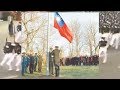
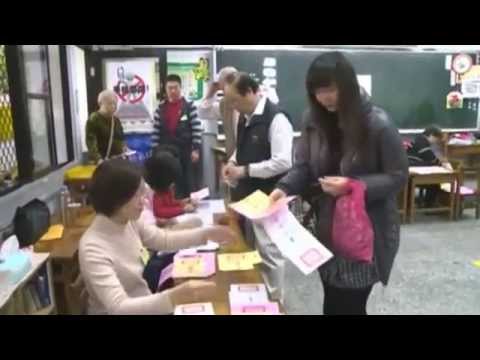
On New Year’s Day 2015, the ROC flag was raised in several ceremonies near Washington, D.C. However, both the American Institute in Taiwan and the Dept. of State stressed that flying the ROC flag "violated" previous agreements, treaties, laws, etc. and is inconsistent with U.S. policy. In reaction to this, the ROC flag was immediately taken down.
Today, however, the question remains: Why is the ROC flag flying over Taiwan? Why isn’t the ROC flag being taken down in Taipei, Taichung, Kaohsiung and other Taiwan cities, according to the precedent established in Washington D.C.?
Importantly, are there any “legal justifications” for the ROC flag to be flying over Taiwan? This video discusses all relevant details.
On New Year’s Day 2015, the ROC flag was raised in several ceremonies near Washington, D.C. However, both the American Institute in Taiwan and the Dep
https://www.youtube.com/watch?v=ZoXjDrZ3sFk
0
0
Taiwan Arms Sales and Military Conscription
201 sec.
Views: 443
Taiwan Arms Sales and Military Conscription
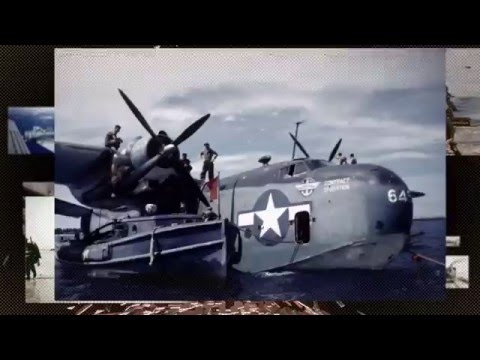
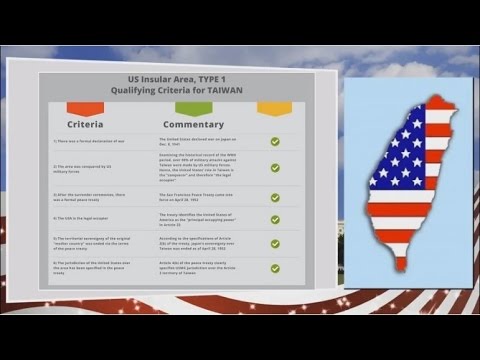
At the close of fighting in the Pacific War, it was the USA which was the legal occupier of Japan and her overseas territories such as Taiwan. In 1952, Taiwan was not awarded to the Republic of China (ROC) in the San Francisco Peace Treaty (SFPT), but the US still allowed the ROC government officials and military personnel to remain in Taiwan as a proxy occupying force, serving as a bulwark against communist expansion. Under the terms of the treaty, the United States then continued its role as the “principal occupying power.”
Based on the 1979 Taiwan Relations Act, the United States sells military hardware to Taiwan, but such sales must necessarily be predicated on an assumption that mandatory military conscription policies in the ROC rest on a firm legal basis. Is there any such legal basis? This video looks at some of the details involved in answering this question.
At the close of fighting in the Pacific War, it was the USA which was the legal occupier of Japan and her overseas territories such as Taiwan. In 195
https://www.youtube.com/watch?v=W6pgj133n_s
0
0
The End of the War and Taiwan's Undetermined Status
1366 sec.
Views: 499
The End of the War and Taiwan's Undetermined Status
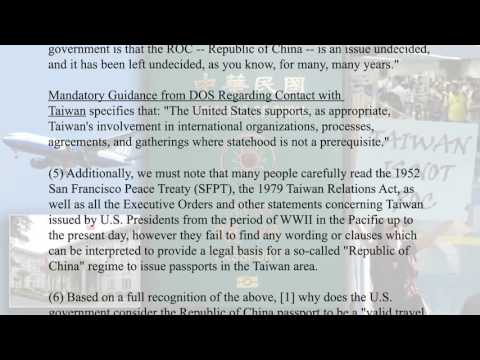
This video explains three common mistakes which many researchers make in discussing Taiwan's legal status. It also includes some insights on how some people "misinterpret" the content of the post-war San Francisco Peace Treaty when discussing the topic of "Who owns Taiwan?"
A sophisticated "Sovereignty Displacement Analysis" is also provided. Moreover, detailed references for the legal concepts presented herein are given at the end.
= = = = = = = = = = = = = =
Chinese subtitled version --
https://youtu.be/1-EEfgKSWNA
This video explains three common mistakes which many researchers make in discussing Taiwan's legal status. It also includes some insights on how some
https://www.youtube.com/watch?v=GihhzLiaT4A
0
0
https://www.youtube.com/watch?v=kAVeHm8qwEQ
0
0
https://www.youtube.com/watch?v=ZQXf8UpvAV8
0
0
https://www.youtube.com/watch?v=9SLJRn-6V8Q
0
0
https://www.youtube.com/watch?v=1_nM052_de0
0
0
https://www.youtube.com/watch?v=o_NDIKTgZAo
0
0
https://www.youtube.com/watch?v=GTYnn1xw_Vw
0
0
https://www.youtube.com/watch?v=8ojr18C1qts
0
0
https://www.youtube.com/watch?v=_U84TbKpR48
0
0
https://www.youtube.com/watch?v=Jo4b5mvhUvU
0
0
https://www.youtube.com/watch?v=nhGBiSXLPn0
0
0
https://www.youtube.com/watch?v=JB59BQHgf00
0
0
https://www.youtube.com/watch?v=TewdA5QjxZs
0
0
https://www.youtube.com/watch?v=Z1SGWW3du-k
0
0
https://www.youtube.com/watch?v=rtgMD5ZvEtk
0
0
https://www.youtube.com/watch?v=Bur-qlCorfI
0
0